Most homeowners operate in a reactive mode. Something breaks, water starts dripping, or the power flickers — and only then does the phone come out to find someone who can fix it. It’s an understandable pattern, but it’s also one of the most expensive habits a homeowner can have. Emergency repairs consistently cost far more than scheduled maintenance, and the collateral damage that builds up while a problem goes unaddressed can turn a minor fix into a major renovation.
The smarter approach is preventive. By investing in the right professional services on a regular schedule, you protect your home’s structural integrity, keep your systems running efficiently, and avoid the kind of cascading failures that wipe out emergency funds. Whether you own a newer build or an older home with years of deferred maintenance, these are the services worth putting on your calendar before something goes wrong.
Get Ahead of Heating and Cooling Failures with Routine Professional Maintenance
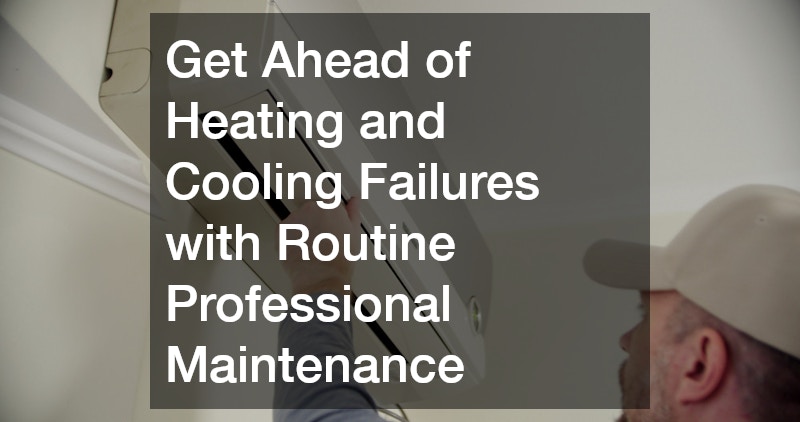
Of all the mechanical systems in your home, your heating and cooling setup is one of the most expensive to replace and one of the most neglected when it comes to scheduled care. Many homeowners skip annual maintenance entirely until the system stops working on the hottest day of August or the coldest night in January — at which point they’re at the mercy of emergency service windows and whatever parts happen to be available.
Hiring a reputable HVAC company for seasonal tune-ups is one of the highest-return maintenance investments you can make. A qualified technician will inspect and clean the evaporator and condenser coils, check refrigerant levels, test thermostat calibration, inspect ductwork for leaks, and replace filters. These aren’t cosmetic tasks — they directly affect how hard your system works and how long it lasts. A dirty coil alone can reduce efficiency by up to 30%, meaning your system runs longer cycles, consumes more energy, and wears out faster. Catching a refrigerant leak or a failing capacitor during a routine visit costs a fraction of what an emergency replacement demands.
Here’s what to look for when choosing a provider:
- Verify NATE (North American Technician Excellence) certification
- Ask whether the service contract covers both heating and cooling inspections
- Confirm they perform duct leakage testing, not just visual checks
- Request an itemized service summary after every visit, so you have documentation of the system’s condition over time
Stop Ignoring Flickering Lights and Tripped Breakers — They’re Costing You More Than You Think
Electrical problems are easy to dismiss. A breaker trips, you reset it. A light flickers; you assume it’s the bulb. But these small signals are often symptoms of larger issues — overloaded circuits, deteriorating wiring insulation, or an undersized panel that was never upgraded to meet the demands of a modern household. Left unaddressed, these issues don’t just inconvenience you. They create fire hazards and, in many cases, quietly drive up your utility bills.
Scheduling professional electrical services every three to five years — or immediately after purchasing an older home — gives you a clear picture of your system’s safety and capacity. A licensed electrician will assess your panel’s load capacity, inspect wiring for signs of wear or improper installation, test GFCI and AFCI outlets, and identify any code violations that could affect your homeowner’s insurance coverage. Homes built before the 1980s are especially likely to have aluminum wiring or outdated panels — Federal Pacific and Zinsco panels, in particular, are widely flagged as fire risks — that look functional on the surface but carry danger.
Common warning signs that warrant an immediate call:
- Breakers that trip repeatedly under normal loads
- Outlets that feel warm to the touch or show scorch marks
- Lights that dim noticeably when large appliances turn on
- A panel that buzzes, hums, or shows signs of rust or corrosion
- A home with no GFCI outlets in kitchens, bathrooms, or outdoor areas
Catch Leaks Early by Scheduling Annual Plumbing Inspections
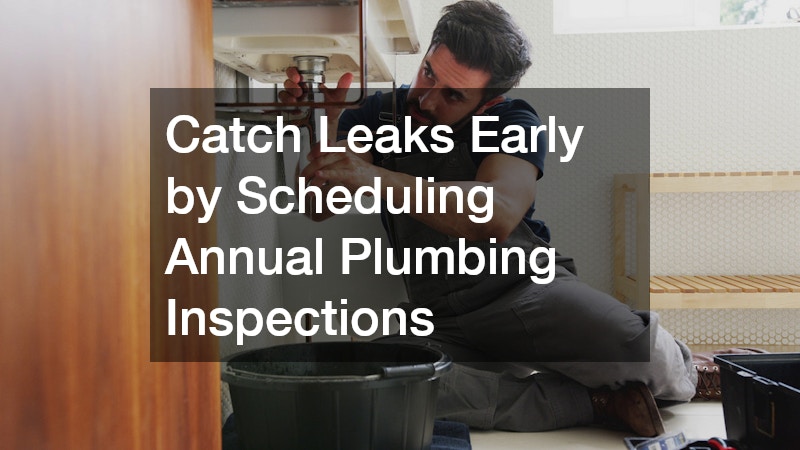
Water damage is the second most common cause of homeowner insurance claims, and the frustrating truth is that most of it is preventable. Slow leaks under sinks, failing supply lines behind washing machines, and corroded water heater connections can go undetected for months — quietly saturating subfloors, feeding mold colonies behind walls, and driving up water bills in ways that are easy to attribute to other causes.
Building a relationship with local plumbers who offer annual inspection services is one of the most practical things a homeowner can do. A thorough inspection should include water pressure testing — high pressure above 80 psi accelerates pipe wear significantly — supply line checks on all appliances, a water heater flush to remove sediment buildup, and a drain flow assessment to catch partial blockages before they cause backups. If your home is more than 30 years old, ask specifically about the pipe material. Galvanized steel corrodes from the inside out, and polybutylene pipes, common in homes built from the mid-1970s through the 1990s, are known to fail without warning.
What to ask when hiring a plumber:
- Are they licensed and insured in your state?
- Do they carry cameras for in-line pipe inspection?
- What is their process for documenting findings and recommending repairs?
- Do they provide a written assessment before any work begins?
Prevent Thousands in Water Damage by Keeping Your Gutters Clean and Functional
Gutters are one of those home features that most people only think about when they’re visibly overflowing or pulling away from the fascia. But they serve a critical function: channeling water from your roof away from your home’s foundation, siding, and basement. When they’re clogged with debris, improperly pitched, or leaking at the seams, they redirect that water exactly where you don’t want it — and the resulting damage is often far more extensive than any gutter maintenance would have been.
Working with a professional gutter contractor rather than tackling this as a DIY job has real advantages. A trained eye can spot issues that aren’t visible from the ground: sagging sections that no longer drain properly, separated seams that drip water behind the fascia board, and downspouts that terminate too close to the foundation. Cleaning should be done at least twice a year — once in late spring and once in late fall after leaf drop — but homes surrounded by dense tree coverage may need quarterly attention. Beyond cleaning, ask your contractor to evaluate whether your current system has adequate capacity for your roof’s square footage and your region’s rainfall patterns, as undersized gutters are a surprisingly common and overlooked problem.
Protect Your Home from the Bottom Up with Timely Foundation Assessments

Foundation problems are the category of home repair that homeowners fear most — and for good reason. By the time visible damage is obvious, the underlying issue has usually been developing for years. The good news is that early intervention is significantly less disruptive than waiting, and many of the warning signs are detectable well before structural damage becomes severe.
Foundation repair is not a service most homeowners need annually, but scheduling a professional assessment at the first sign of trouble is critical. Warning signs worth taking seriously include hairline cracks running diagonally from the corners of windows and door frames, doors or windows that have suddenly become difficult to open or close, floors that feel uneven or springy underfoot, and water consistently pooling against the base of the home after rain. These symptoms can point to settlement, heaving, or lateral wall movement — each of which requires a different repair approach and gets considerably more complex the longer it is ignored.
What a professional structural assessment typically covers:
- Visual inspection of interior and exterior foundation walls
- Measurement of floor levelness using a laser level
- Identification of the likely cause — soil conditions, drainage issues, tree roots, or hydrostatic pressure
- A written report with repair options ranked by urgency
- Referral to a structural engineer if findings warrant independent review
One of the most effective ways to prevent foundation issues from developing in the first place is to address the contributing factors: keep gutters clean and properly directed, maintain drainage grading that slopes away from the home, and avoid planting large trees within 15 to 20 feet of the foundation.
Make Your Home More Energy Efficient by Upgrading Old or Failing Windows
Windows do more work than most people realize. Beyond letting in light and ventilation, they act as a thermal barrier between your conditioned interior and the outdoor environment. When that barrier fails — through broken seals, deteriorating frames, or single-pane glass that was never adequate to begin with — the result shows up on your energy bills every month without ever announcing itself as a specific, identifiable problem.
Professional window installation services give homeowners access to accurate energy assessments that go beyond what’s visible from inside the house. A specialist can identify condensation trapped between panes — a clear sign that the insulating gas has escaped and the seal has failed — measure air infiltration around frames using a blower door test, and evaluate whether your current windows carry sufficient energy ratings for your climate zone. When replacing windows, the two most important specifications to understand are the U-factor, which measures heat transfer (lower is better), and the Solar Heat Gain Coefficient, which measures how much solar radiation passes through the glass. In cold climates, a higher SHGC can help with passive solar heating; in hot climates, a lower SHGC reduces cooling loads considerably.
Keep Your Garage Door in Top Shape to Avoid Security and Safety Risks

Garage doors are the largest moving mechanical component in most homes, and they’re operated multiple times a day, every day, for years without a second thought. That level of use puts significant stress on springs, cables, rollers, and tracks — and when any of those components fail unexpectedly, the consequences range from an inconvenient lockout to a genuine safety hazard.
Scheduling annual professional maintenance on your garage doors covers lubrication of all moving parts, spring tension testing, cable inspection, track alignment, and verification that the auto-reverse safety mechanism is functioning correctly. A torsion spring under full tension carries enormous stored energy; attempting to adjust or replace one without proper training is genuinely dangerous and accounts for a meaningful number of home injury incidents each year. Beyond safety, a well-maintained door also contributes to home security and energy efficiency — deteriorated weatherstripping allows conditioned air to escape and gives insects and moisture an entry point into the garage and potentially the home itself.
Smart features worth discussing with a technician during a service visit:
- Battery backup systems that keep the door operational during power outages
- Auto-reverse sensors that meet current UL 325 safety standards
- Wi-Fi-enabled openers that allow remote monitoring and operation
- Upgraded weatherstripping along the bottom and sides of the door
Add Years to Your Siding and Trim by Hiring the Right Exterior Painting Professional
Exterior paint is often thought of purely as a cosmetic investment, but that framing undersells its actual function. A properly applied exterior finish acts as a moisture barrier, sealing wood, stucco, and masonry against the water infiltration that leads to rot, mold, and structural damage. When that barrier fails — through peeling, cracking, or chalking — the underlying materials are exposed to moisture cycling that degrades them far faster than paint degradation alone would suggest.
Hiring experienced exterior painting companies rather than going with the lowest bid is a decision that pays off in the longevity of the job. The most common reason exterior paint fails prematurely isn’t the paint itself — it’s inadequate surface preparation. A quality contractor will power wash the surface, scrape and sand all failing paint, spot-prime bare areas, apply a full coat of bonding primer, and use two finish coats of a high-quality exterior paint rated for your climate. Ask any prospective contractor to walk you through their prep process specifically, and be cautious of any bid that skips or minimizes the preparation phase. A quality exterior paint job in most climates should last seven to ten years; a rushed one often fails in a fraction of that time.
Eliminate Tree Hazards Before a Storm Turns Them into an Insurance Claim
Trees are one of the most valuable assets on a residential property — they provide shade, improve curb appeal, reduce cooling demands, and support local ecosystems. But trees that are diseased, structurally compromised, or simply too large for their proximity to the home represent one of the most underappreciated risks a homeowner faces. A single large branch failure during a storm can take out a section of roof, knock out power lines, or destroy a fence or parked vehicle. Full tree failures can be catastrophic.
Professional tree services go well beyond what most homeowners can assess on their own. A certified arborist will evaluate the canopy for signs of disease, inspect the root zone for decay or destabilization, assess the tree’s structural integrity, including co-dominant stems and included bark — a common structural weakness — and assign a risk rating based on proximity to structures. Routine crown thinning and deadwood removal reduce wind resistance and the likelihood of branch failure significantly. Many homeowners are also surprised to learn that their homeowner’s insurance may not cover storm damage caused by a tree that was visibly diseased or hazardous before the event, making proactive assessment not just a safety measure, but an important financial one.
Protect Your Landscaping Investment and Prevent Pest Problems with Consistent Lawn Care
A well-maintained lawn is more than a matter of appearance. Overgrown grass and neglected landscaping create conditions that invite problems well beyond aesthetics: tall grass harbors ticks, mosquitoes, and rodents; thatch buildup prevents water and nutrients from reaching root systems; and encroaching turf can undermine the edges of driveways, walkways, and retaining walls over time.
Hiring a professional lawn mowing service provides more consistent results than most homeowners achieve on their own, and not just because of frequency. Professional crews maintain sharp blades — dull blades tear grass rather than cutting it cleanly, making turf significantly more susceptible to disease and drought stress. Mow at optimal height for the specific grass variety, and manage clippings in ways that either return nutrients to the soil or remove excess thatch. A regular service schedule also means that changes in your lawn’s health, such as brown patches, fungal growth, or soil compaction, are caught early and addressed before they spread. When bundled with seasonal aeration, overseeding, and edging, professional lawn maintenance protects your hardscaping investments and keeps your property’s exterior in a condition that supports rather than detracts from its overall value.
The through line connecting all of these services is the same: small investments made consistently and proactively will always outperform large, urgent expenditures made under pressure. The math, in nearly every case, favors the homeowner who schedules maintenance over the one who waits for failure.
The most practical step you can take after reading this is to build a seasonal home maintenance calendar and populate it with the services your home actually needs. Audit what has been skipped, identify the professionals in your area who do each type of work well, and start building those relationships before you need them urgently. A home that is consistently maintained doesn’t just protect your finances — it’s safer, more comfortable, and worth considerably more when it comes time to sell. The professionals you invest in today are the ones who already know your home when the next problem arises.